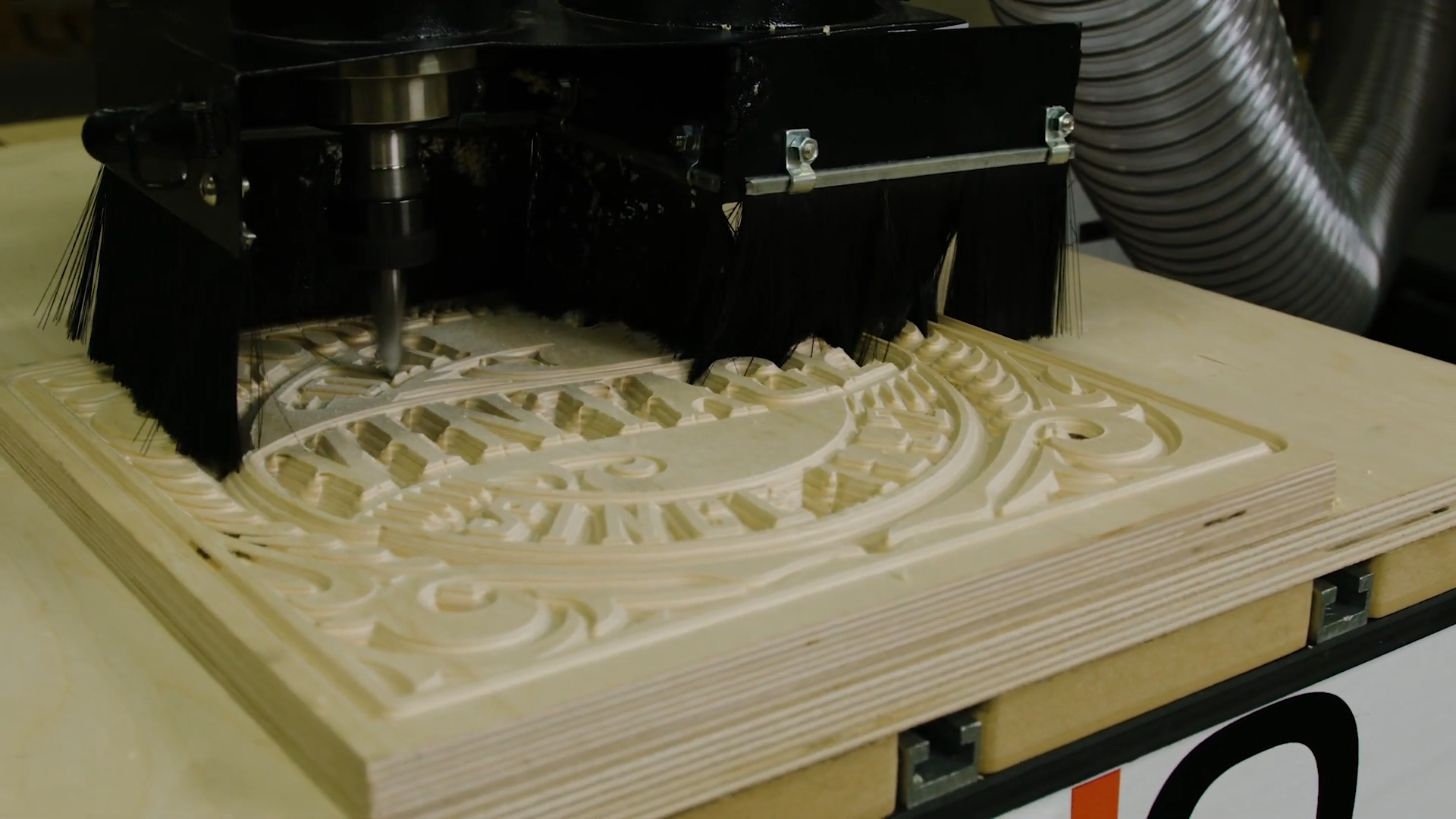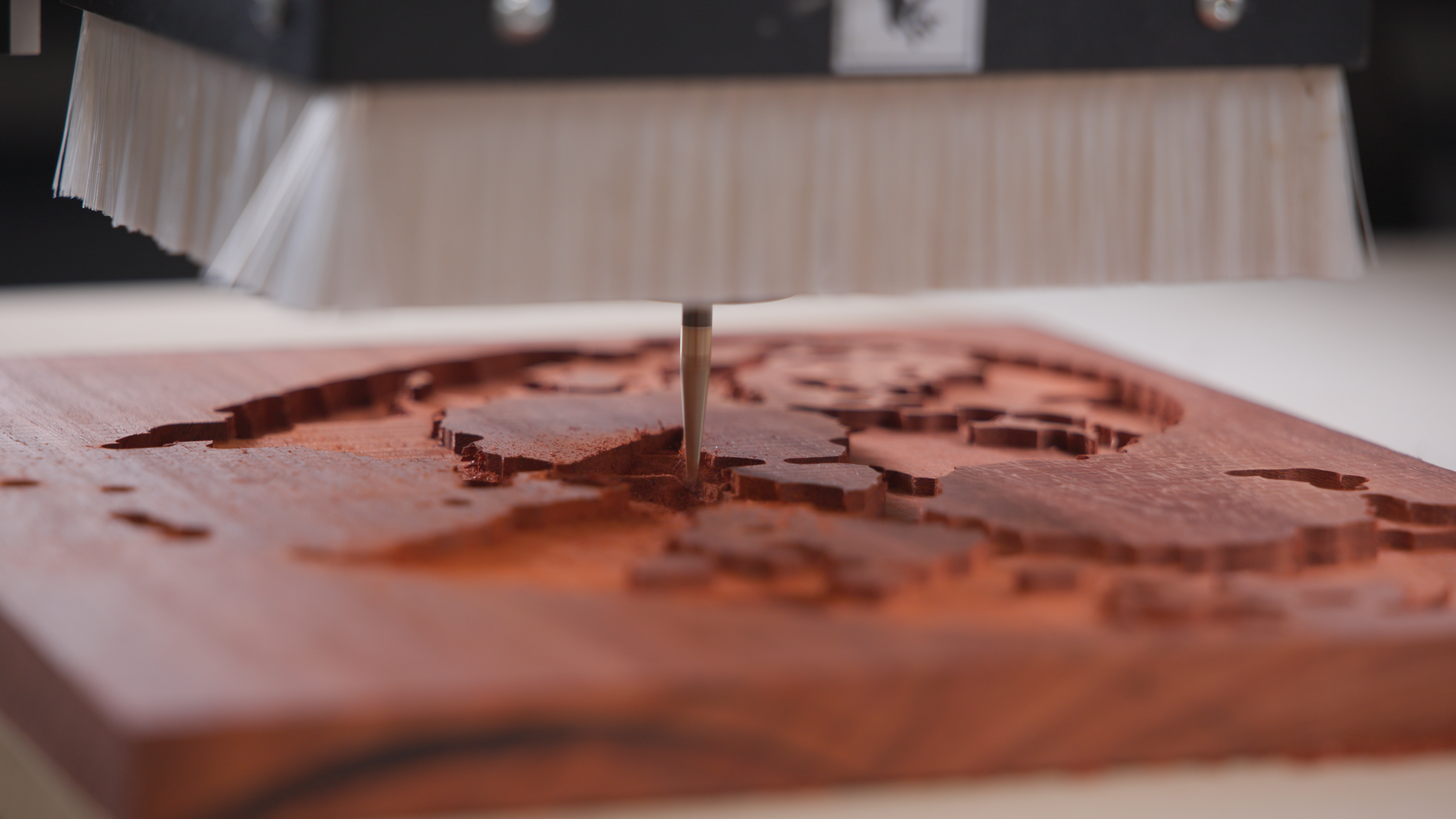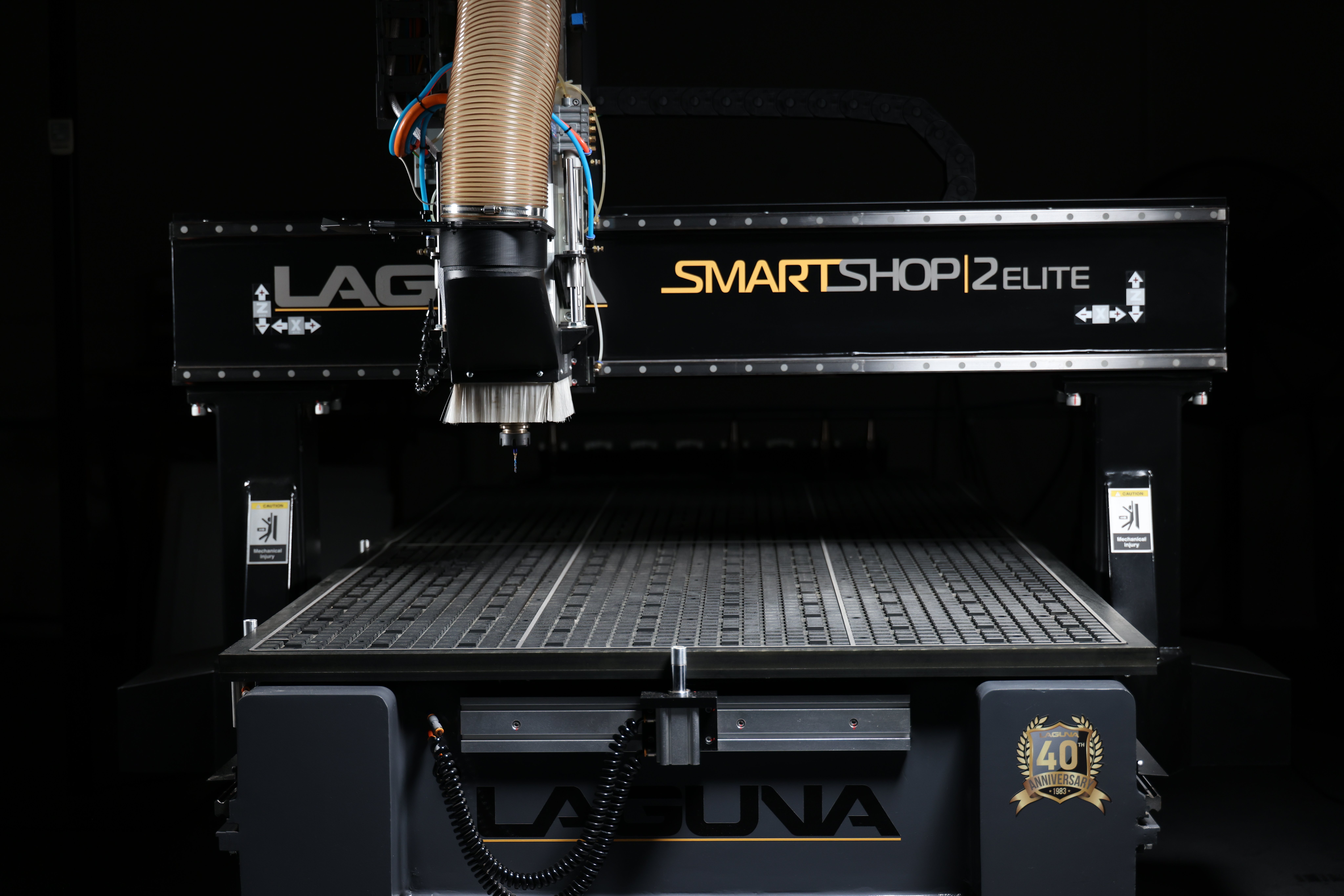
Yes, and it does it exceptionally well. CNC machines are among the most capable tools for cutting, carving, engraving, and profiling wood across every scale of production, from small custom shops to large furniture manufacturers. Wood is one of the primary materials CNC routers are built around. This guide covers how it works, what types of wood cut well, which machines and tools handle the job, and what you can realistically produce.
Can a CNC Machine Cut Wood?
A CNC router cuts wood by moving a spinning carbide bit along a computer-programmed path, removing material precisely and repeatedly according to a digital design file. The process handles everything from simple profile cuts and sheet goods work to deep pocket carving, 3D relief work, and intricate joinery. Wood is one of the most compatible materials for CNC routing: durable enough to hold detail, soft enough to cut efficiently, and available in enough variety to cover nearly any application.
The range is broader than most people expect. Cabinet shops run sheet goods through production routers all day. Sign makers carve dimensional lettering in hardwood. Custom furniture makers use CNC for precise joinery that would take hours by hand. Artists produce 3D relief sculptures with detail no manual tool could replicate at speed. The process scales from a single custom piece to thousands of identical production parts without any fundamental change in approach.
How Does a CNC Machine Cut Wood?
The process follows a consistent sequence regardless of machine size or design complexity. Breaking it into four main steps makes it easier to understand where setup decisions affect the finished output and where the most common mistakes get made.
Design the Project
CNC cutting starts with a digital design file. For 2D work like profile cuts, pockets, and engraving, that typically means a vector file created or imported in CAM software. For 3D carving, it means a 3D model. CAM software like Vectric VCarve, Aspire, or Fusion 360 converts those designs into machine-readable toolpaths that tell the router exactly where to move and at what speed. The quality and accuracy of the design directly affects the quality of the finished piece: errors or insufficient model resolution in the file will show up in the cut part.
Prepare and Secure the Wood
The workpiece needs to be flat, dimensioned to fit the machine bed, and secured against movement. A blank that shifts during a cut produces a ruined part. Vacuum tables are common for sheet goods in production environments. Clamps, T-slot fixtures, and double-sided tape all work depending on part size and geometry. Taking time to verify holddown before starting a job is not optional.
Set the Machine Parameters
Spindle speed, feed rate, and depth of cut need to be matched to the specific wood species and bit in use. Hardwoods require different parameters than softwoods, and engineered woods like MDF cut cleanly but generate fine dust that requires proper collection. Most operators build a library of proven settings for the materials they run regularly rather than recalculating from scratch each time, and that library becomes one of the most valuable assets in a production shop.
Start Cutting or Engraving
Once secured and set up, the machine runs the programmed toolpath. Production work typically uses a roughing pass to remove bulk material followed by a finish pass for surface quality. For simpler 2D cuts, a single pass through the profile is often sufficient. Monitoring the first run of a new job catches problems before they ruin stock.

What Types of Wood Can a CNC Machine Cut?
CNC routers cut virtually every wood type in common use. The relevant distinctions are between hardwoods, softwoods, and engineered wood products, each with different cutting characteristics that affect tooling, parameters, and finish quality.
Hardwoods
Oak, maple, walnut, cherry, and ash produce excellent results on a CNC router. Their tight grain supports clean edges and fine detail work, and they hold tolerances reliably across a job. Hardwoods require sharper tooling and more conservative feed rates than softer materials, and denser species wear bits faster. The trade-off is finished surface quality and durability that softer materials cannot match, which is why hardwood is the choice for furniture, cabinetry, and decorative work where appearance matters.
Softwoods
Pine, cedar, fir, and spruce cut quickly with less tool wear, but the softer fibers are more prone to tearout when the bit is dull or feed rate is too slow. Softwoods are a practical choice for painted work, prototyping, and applications where material cost matters more than grain appearance.
Engineered Woods
MDF, plywood, and particleboard are among the most consistently machinable materials on a CNC router. Their uniform composition eliminates grain direction and natural defects. MDF cuts with exceptional cleanliness and holds detail well for painted cabinet doors and decorative panels. Plywood with compression bits is the standard for furniture and cabinetry production. The primary consideration is dust: engineered wood products generate fine particulate at high volume and require proper collection.
CNC Machine Options for Cutting Wood
CNC Wood Routers
CNC routers are the primary machine type for wood cutting and carving. They use a high-speed rotating spindle to drive cutting bits along programmed X, Y, and Z axes, removing material in controlled passes to produce the programmed shape. Sizes range from compact benchtop units suited to small custom work up to full industrial routers with 5' x 10' beds or larger that run sheet goods in production environments. Spindle power, frame rigidity, and drive system quality all affect what a router can produce and how consistently it holds tolerances across a job. For production wood work, machine quality shows directly in the finished parts and is not a variable to cut corners on.
CNC Wood Engraving and Etching Machines
Dedicated CNC engraving machines are optimized for surface detail work: logos, text, decorative patterns, and shallow relief carving. They typically offer smaller work areas and lighter spindles than full production routers but deliver high precision on fine detail work where depth variation is measured in fractions of a millimeter. For shops focused primarily on engraving rather than through-cutting or deep carving, a dedicated machine can be a more cost-effective fit than a full production router. Many full-size CNC routers also handle engraving as part of a broader capability set, making a separate machine unnecessary when the production mix includes both.

CNC Bits and Cutting Tools for Wood
Types of CNC Router Bits
Upcut spiral bits pull chips up and out of the cut, keeping the zone clear but sometimes causing tearout on the top surface. They work well for through cuts and deep pockets. Downcut spirals produce a cleaner top surface at the cost of more chip buildup in deep cuts. Compression bits combine both geometries for clean surfaces on both faces simultaneously, making them the standard for plywood and sheet goods work where both sides will be visible. V-bits handle lettering, decorative line work, and chamfering. Ball nose end mills handle 3D contour carving. Straight flute bits work for dadoes, grooves, and simple profiling.
Choosing the Right Cutting Tool
The right bit depends on the operation, material, and finish requirement. Carbide is the standard for production wood cutting because it holds an edge significantly longer than high-speed steel and handles the abrasive silica content in hardwoods and engineered products. Smaller diameter bits produce finer detail but require slower feed rates. Matching bit geometry to the specific cut is as important as dialing in feeds and speeds.
CNC Settings for Cutting Wood
Spindle Speed
CNC wood routers typically run between 12,000 and 24,000 RPM. Higher RPM produces smoother surfaces but generates more heat if the feed rate is not fast enough to maintain adequate chip load. Larger diameter bits run at lower RPM than smaller bits to maintain consistent cutting edge speed.
Feed Rate
Feed rate works with spindle speed to determine chip load, how much material each cutting edge removes per revolution. Too low a chip load causes rubbing and heat buildup that burns wood and dulls bits quickly. Too high overloads the tool. For hardwood, a starting chip load of 0.005" to 0.010" per tooth is a common reference point, adjusted based on results on the specific material and machine.
Depth of Cut
Deeper passes reduce cycle time but increase cutting forces. For hardwoods, starting with a depth equal to the tool diameter for roughing, with a lighter finish pass for surface quality, is a reliable approach. Thin materials and fine detail work call for shallower passes to avoid deflection and maintain accuracy.
Tips for CNC Wood Cutting
Choose the Right Wood
Clear, kiln-dried stock conditioned to shop humidity produces more consistent results than wet or defect-heavy lumber. For detailed carving, tight-grained species hold fine features better than open-grained alternatives.
Clamp the Material Securely
Movement during a cut is the most common cause of ruined parts. Test holddown before running a production job. The right method depends on part size, geometry, and whether through-cuts are involved.
Use Proper Dust Collection
Chips accumulating in the cut zone re-enter the cutter and generate heat that degrades surface quality and shortens tool life. In deep pockets, active chip evacuation directly affects the finished result. Hardwood dust is a respiratory hazard, and MDF dust is harder on lungs and collection systems than solid wood. Dust collection connected close to the spindle is baseline equipment for any serious wood cutting operation.
Select the Right Software
Vectric VCarve and Aspire are widely used in wood routing for accessible workflow and strong toolpath quality. Fusion 360 suits operators who also do mechanical design or need more toolpath control. Simple 2D routing is well-served by entry-level tools; complex 3D carving and production nesting benefit from more capable platforms.
Advantages of Cutting Wood With a CNC Machine
The advantages over manual woodworking come down to precision, repeatability, and the ability to produce complex geometry efficiently. A CNC router holds tolerances that hand tools cannot match across a production run, produces the same part identically from first piece to last, and cuts shapes that would require hours of skilled hand work in a fraction of the time. For shops doing any meaningful volume, CNC routing reduces labor cost per part, increases production capacity, and improves consistency in ways that manual methods cannot replicate at scale. For custom work, it makes designs achievable that would not be practical to produce otherwise.
What Can You Make With a CNC Wood Machine?
The application list is long. Cabinetry and furniture components are among the highest-volume uses, with production shops running full sheets continuously. Custom signs, dimensional lettering, and decorative panels are standard sign shop output. Relief carvings, artistic panels, and 3D sculptural pieces serve interior design and architectural applications. Cutting boards, serving boards, and personalized gift items represent the high-margin craft and consumer end. Musical instrument components, flooring details, architectural millwork, and retail fixtures complete the commercial range.
If wood is the material and precision or repeatability is the requirement, a CNC machine is almost certainly part of the answer. Laguna Tools builds CNC routers for every level of wood production, from serious hobbyist to full industrial output. Contact our team to discuss which machine fits your work.