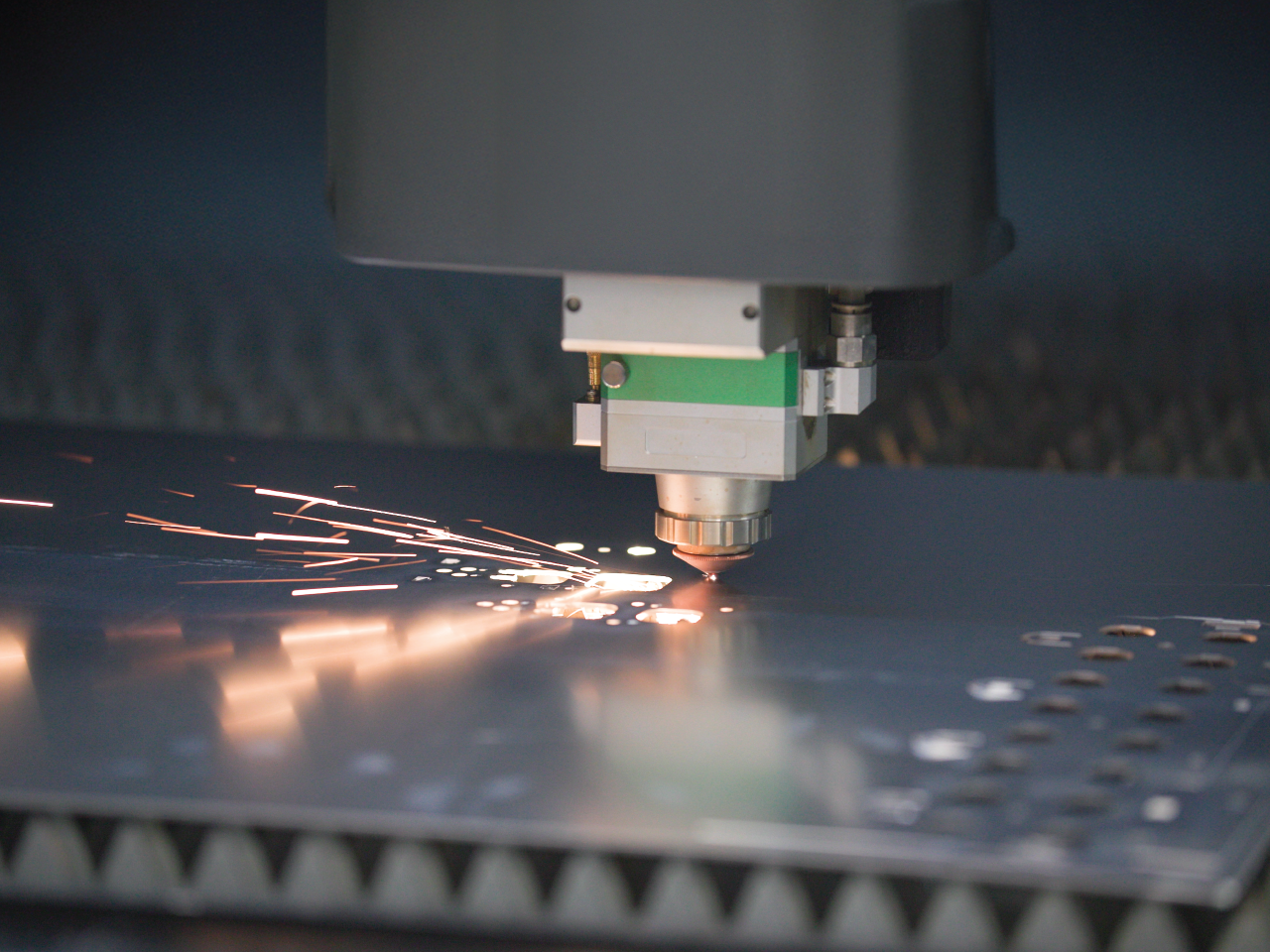
Wattage is the first number most buyers look at on a fiber laser spec sheet, and it is easy to understand why. It feels like the clearest measure of what a machine can do. But wattage alone does not tell you whether a machine is the right fit for your shop. The right wattage depends on what you are cutting, how thick it runs, how much volume you push through, and what you can sustain in operating costs over the life of the machine. Get those questions answered first, and the wattage decision mostly makes itself.
This guide walks through the factors that actually drive the wattage selection so you can approach the purchase with a clear target instead of guessing at specs.
Why Fiber Laser Wattage Matters
Wattage is the primary driver of cutting speed and maximum cutting thickness. More power means the machine cuts faster at a given thickness, handles thicker stock, and maintains edge quality on demanding materials like copper and heavy aluminum that lower-power machines struggle with consistently.
That said, wattage does not operate in isolation. Beam quality, cutting head design, assist gas delivery, and control software all affect real-world performance. A high-wattage machine with poor beam quality or inadequate gas delivery will not outperform a well-engineered lower-wattage machine on the work that matters to your shop. Wattage sets the ceiling. Everything else determines how close you get to it.
How to Choose the Right Fiber Laser Wattage for Your Shop
The most reliable way to land on the right wattage is to work through a few specific questions about your shop before you look at machine specs. Most shops that end up with the wrong machine skipped this step and shopped by spec sheet instead of by actual workload.
Start with your primary application
Cutting, marking, and engraving have different power requirements that do not overlap much. Cutting thick steel is the highest-demand application. Marking part numbers on finished metal is at the other end of the spectrum. If your primary need is marking or engraving rather than through-cutting, your wattage requirement is likely much lower than a cutting-spec machine suggests. Defining the primary use case before anything else keeps you from paying for capability you will never use.
Identify your most common materials
Material type affects wattage requirements more than most buyers expect. Mild steel is the most forgiving and cuts efficiently across a wide wattage range. Stainless needs clean nitrogen assist and benefits from higher wattage at thicker sections. Aluminum dissipates heat quickly due to high thermal conductivity and needs more power relative to its thickness than steel. Copper and brass are the most demanding: their reflectivity means more laser energy bounces back rather than being absorbed, which requires higher wattage to maintain a stable cut and raises machine safety considerations if the system is not rated for reflective metals.
Define your typical material thickness range
The thickness you run most often should drive the wattage decision, not the thickest piece you might ever cut. A shop running mostly 1/8" to 1/4" mild steel has a fundamentally different requirement than a shop regularly processing 3/4" plate. Size the machine for your actual workload. Edge cases are a poor basis for a capital equipment decision.
Estimate your production volume
Higher wattage produces faster cut speeds, which means more parts per shift. If cycle time on the laser is a production bottleneck, higher wattage pays for itself through throughput. If the machine runs at modest volume, the speed premium of stepping up a wattage tier may not generate enough additional revenue to justify the cost difference. Be honest about where your volume actually sits today, not where you hope it will be.
Compare wattage needs against your budget
Machine cost scales with wattage but not linearly. Going from 1,500W to 3,000W is a meaningful performance jump with a reasonable cost step. Going from 10,000W to 12,000W is a much smaller relative performance gain for a significantly larger price difference. Understand where the real capability thresholds are and buy to clear the threshold your work requires rather than to maximize wattage within a budget.
Leave room for future shop growth
If your business is growing and you expect to take on thicker materials or higher volume in the next two to three years, buying slightly above your current minimum is reasonable planning. But specifying for a hypothetical production scenario five years out is how shops end up with machines that are expensive to run and underutilized in the near term. The machine needs to pay for itself on the work you have now.
Choose Wattage Based on the Type of Work Your Shop Does
Fiber laser cutting
Through-cutting is the highest wattage demand in fiber laser work. For cutting-centric shops, wattage determines both the thickest material you can process and how fast you can process it, and both directly affect what jobs you can quote competitively and at what margin.

Fiber laser marking
Part number marking, barcode marking, serial numbers, and compliance marks on finished metal parts require far less power than cutting. A 20W to 100W fiber laser handles most marking applications well. Shops evaluating cutting-class machines primarily for marking work are almost certainly over-specifying and paying for wattage they will never use.
Mixed-use shop applications
Shops that need to cut, engrave, and mark face the most complex wattage decision because the requirements span the full range. The practical approach is to specify for the most demanding application, almost always cutting, and verify that the machine's reduced-power operating modes handle marking and engraving adequately. Most modern fiber laser cutting machines run at reduced power settings for lighter-duty applications without issue.
Match Fiber Laser Wattage to Your Material Type
Mild steel is the benchmark. It cuts cleanly across a broad wattage range and is what most manufacturer spec tables are built around. If mild steel is your primary material, your wattage requirement is relatively straightforward to calculate from thickness and speed targets.
Stainless steel requires nitrogen assist gas for a clean, slag-free edge and benefits from higher wattage at sections above 1/4". Aluminum's high thermal conductivity means it needs more power relative to its thickness than steel, and sections above 3/8" benefit from stepping up a wattage tier. Copper and brass are the most demanding: their reflectivity requires higher wattage to sustain a stable cut and poses machine safety risks if the system is not specifically rated for reflective metals. If those materials are in your mix at any significant volume, verify machine ratings before purchase and request a cut demonstration.
Common Mistakes Shops Make When Choosing Fiber Laser Wattage
Buying based only on the highest wattage available
Higher wattage costs more to buy, more to operate, and more to cool. A shop running primarily thin mild steel does not cut it faster or better on a 10,000W machine than on a well-set-up 3,000W machine. More wattage does not improve results on material that does not require it.
Choosing based only on maximum cutting thickness
Maximum thickness specs describe an edge condition, not a production condition. A machine rated to cut 1" steel can usually do it slowly, with high assist gas consumption, and with edge quality that may not pass in production. The more useful number is what thickness the machine cuts at production speed with acceptable edge quality, which is always lower than the rated maximum.
Underestimating difficult or reflective materials
A machine adequate for mild steel may be underpowered for copper, brass, or heavy aluminum. Shops that discover this after purchase end up running marginal cut quality or risking machine damage from back-reflected energy. If those materials are in your mix, verify ratings specifically for them and ask for a demonstration before you buy.
Choosing too little wattage for production work
A machine that can technically cut the right thickness but cannot sustain production speed creates a bottleneck that does not go away. If it needs multiple passes where a higher-wattage machine would need one, the throughput loss compounds over every shift and the lower purchase price does not offset it.
Ignoring machine quality, training, and support
Wattage is a specification. The machine delivering it is a complete system, and the support behind it is part of what you are buying. A well-engineered machine with good beam quality, reliable controls, and accessible service will outperform a higher-wattage machine from a supplier whose support infrastructure cannot sustain your production environment. Ask about service response time, parts availability, and training before you commit.
What Else Matters Besides Fiber Laser Wattage?
Beam quality and consistency
Beam quality, expressed as M squared (M2) or beam parameter product (BPP), determines how tightly the laser focuses and how consistently it holds that focus. A lower M2 means a smaller focused spot, cleaner cut edges, and better performance on detailed features. Two machines with identical wattage but different beam quality will not produce the same results on the same material.
Cooling and machine stability
High-wattage fiber lasers generate significant heat that the cooling system has to manage to keep output power stable and cut quality consistent. An undersized cooling system leads to power drift, inconsistent performance, and shortened component life. Evaluate the cooling system as part of the machine selection, not as an afterthought.
Software and control flexibility
Control software determines how easily you can dial in cut parameters across materials and thicknesses, manage sheet nesting, and integrate the machine into your production workflow. Software that is hard to use or inflexible costs real money in programming time and operator productivity over the life of the machine.
Supplier support, training, and service
A fiber laser is a significant capital investment that will be in your shop for years. Training quality, service responsiveness, and parts availability all affect productive uptime over that period. The ongoing support relationship is part of the total cost of ownership and worth evaluating as carefully as the machine specs.
How to Decide What Wattage Is Right for Your Shop Type
Best fit for small shops and light-duty work
Small fabrication shops, custom fabricators, and machine shops with occasional laser work running primarily thin sheet at modest volume typically land in the 1,000W to 2,000W range. These machines cover common sheet metal thicknesses at reasonable speed with lower purchase and operating costs than higher-wattage machines. If this describes your shop, there is no reason to over-specify.
Best fit for growing shops with mixed jobs
Shops handling a broader material and thickness range, including stainless and aluminum alongside standard mild steel, typically fit the 3,000W to 6,000W range. This tier handles the variety without the cost premium of the highest-wattage machines and gives growing shops room to take on heavier work without immediately outgrowing the machine.
Best fit for high-output industrial shops
Shops running multiple shifts, cutting thick plate regularly, or competing on cycle time in high-volume production environments need to look at 6,000W and above. At this scale, the productivity difference between wattage tiers is measurable in parts per hour and shifts per week, and the cost difference is justified by throughput. For production shops, buying adequate wattage is not optional; it is part of staying competitive.
Conclusion
The right fiber laser wattage is not the highest number you can afford. It is the number that matches your material mix, your typical thickness range, and your production volume, with enough margin to handle the demanding end of your work without throttling your most common jobs.
Work through your application, materials, thickness range, and volume before you start shopping. Then evaluate the full machine, not just the wattage spec. Laguna Tools offers fiber laser systems across a range of wattages and configurations built for production shop environments. Contact our team to talk through the specific requirements of your shop's work and identify the machine that actually fits.