
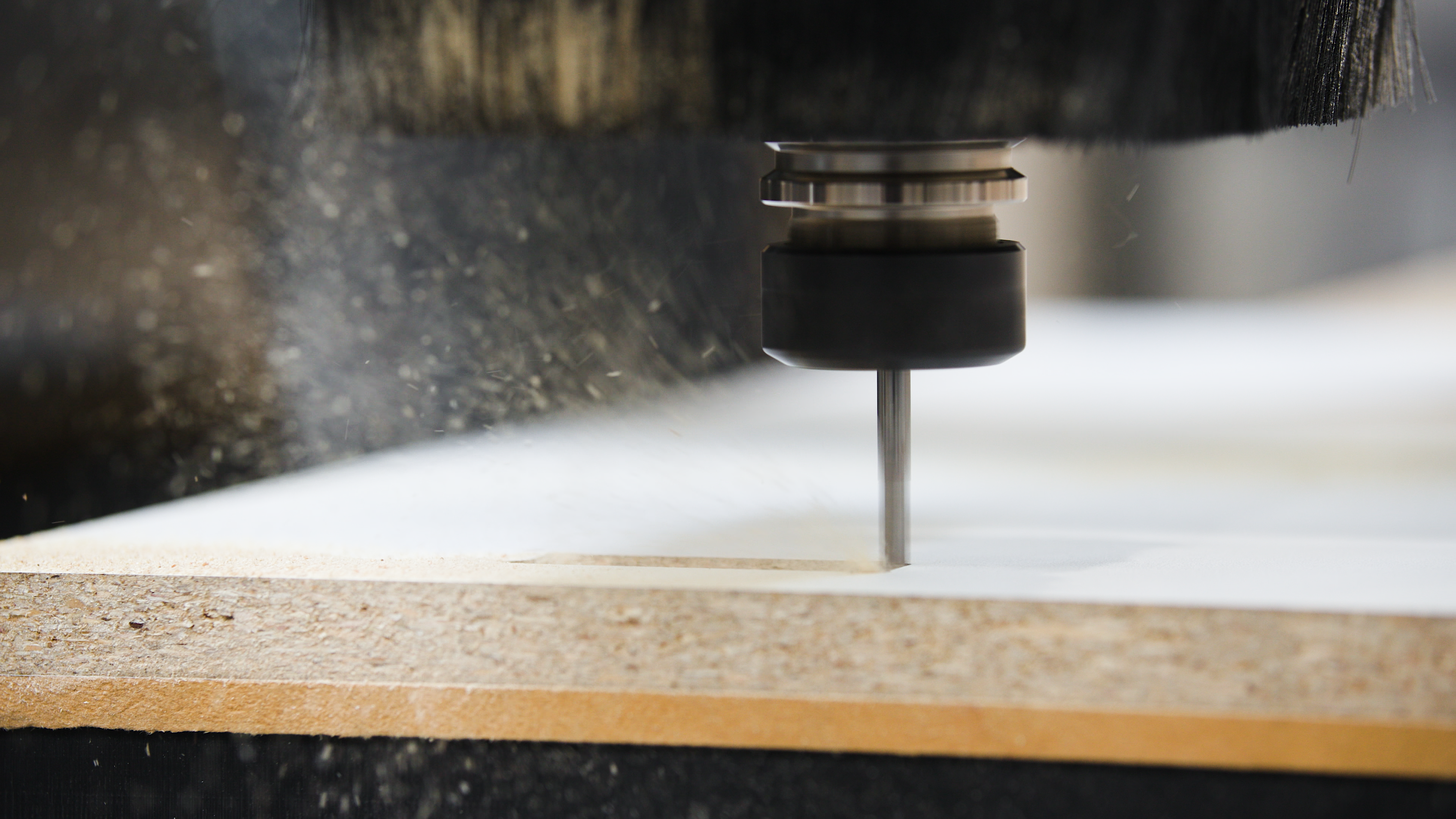
The "best" CNC router bit is not a single product on a shelf. It is the bit that matches the wood you are cutting, the kind of cut you are making, and the finish quality the job demands. Plywood, MDF, and hardwood each behave very differently under a spinning cutter. A bit that produces a glass-smooth edge in cabinet-grade plywood may scorch in oak or shred the face on melamine MDF. Shops that consistently deliver clean parts treat bit selection as a deliberate decision tied to the material in the spindle, not a default they reach for every time.
This guide breaks down the bit choices that work best for plywood, MDF, and hardwood, plus the tooling factors that decide whether your finished parts come off the table ready to ship or ready to sand.
Why Router Bit Selection Matters in Wood CNC Work
The wrong bit costs you in obvious and hidden ways. You see splintering on the top face of plywood, fuzzy edges on MDF, burn marks on cherry, premature dulling, broken cutters, and rework. You feel it in cycle times you cannot improve, sandpaper bills, and parts kicked back from QC.
The right bit, paired with the right feeds and speeds, produces clean edges, predictable performance, and longer tool life. It also reduces dust, chip pack, and heat in the cut, all of which translate to better finishes and less downtime.
The Main Types of CNC Router Bits for Wood
Most CNC wood work runs on a handful of bit geometries. Knowing them by name and behavior makes every other decision easier.
Upcut spiral bits pull chips up and away from the cut. They evacuate chips beautifully and keep the bit cool, but they can lift fibers on the top surface, leaving a fuzzy or splintered face.
Downcut spiral bits push chips down into the cut. They produce a very clean top surface, which is ideal for visible cabinet face material, but they can pack chips at depth and tend to lift parts unless workholding is excellent.
Compression bits combine both geometries on the same shank (upcut on the bottom, downcut on the top) so chips are pulled toward the center of the cut. The result is clean edges on both faces, which is exactly what double-sided plywood and laminated panels need.
Straight flute bits have no spiral. They produce a neutral cut with no lift or push, which can help in certain delicate materials.
V-bits and engraving bits create profile cuts, lettering, and decorative work.
Surfacing or spoilboard bits are large-diameter cutters used to flatten the table or stock material, not for production part cutting.
Best Router Bits for Plywood
Why plywood is prone to splintering and tear-out
Plywood is a stack of thin veneers glued together with alternating grain directions. The very thin face veneers are fragile, and the bottom face is unsupported by the spoilboard once the bit cuts through. Both surfaces want to splinter: the top wants to lift, the bottom wants to blow out.
Best bit types for plywood sheets
Compression bits are the gold standard for plywood. They pull both faces toward the center of the cut, leaving the top and bottom looking equally clean. They are the right call for cabinet sides, doors, and any double-sided plywood part.
When to use compression bits for clean top and bottom edges
Use compression bits any time both faces will be visible or will need to look clean. Cabinet ends, exposed shelving, drawer sides, and case goods all benefit. Set the cut depth so the upcut portion is fully engaged in the lower half of the panel. Most compression bits are sized for nominal 3/4-inch plywood with that geometry in mind.
When downcut bits make sense for top-surface finish quality
For single-sided plywood where only the top face shows, a downcut bit is faster and easier to dial in than a compression bit. You will get an excellent top surface and accept some splintering or fuzz on the bottom, which can be sanded or hidden. Downcut bits also play well with vacuum hold-down, since they push the workpiece toward the table rather than lifting it.
Best Router Bits for MDF
Why MDF cuts differently than plywood and hardwood
MDF has no grain. It is uniform fiber, glue, and resin pressed into panels. That sounds easier than wood, and in some ways it is, since there is no tear-out from grain direction. But MDF dust is extremely fine and abrasive, it generates heat quickly, and the resin can burn or build up on bits faster than natural wood.
Best bit types for MDF cutting and profiling
For straight cuts and profiling, upcut spiral bits with two or three flutes work well. The upcut geometry pulls chips and dust out of the cut, which matters more in MDF than in any other material. For decorative profiles, sharp carbide bits with a smooth surface finish resist resin build-up.
How chip clearing and dust control affect performance in MDF
Dust evacuation is the single most important factor in MDF performance. An upcut bit paired with high-CFM dust extraction at the cutting head keeps the cut cool, the bit clean, and the edge crisp. Without good extraction, MDF dust packs into the kerf, heats the bit, and turns clean cuts into burned, fuzzy ones in minutes.
When to prioritize clean edges vs. cutting efficiency
For decorative MDF that will be painted, a slower finish pass with a sharp upcut bit produces an edge that takes paint cleanly. For internal parts that will be hidden or laminated, run faster and accept a slightly rougher edge.
Best Router Bits for Hardwood
Why hardwood requires more attention to sharpness and heat
Hardwoods like oak, maple, walnut, and cherry are denser, harder, and more thermally sensitive than plywood or MDF. They reveal every imperfection in the cut: dull edges burn instead of cutting, incorrect feeds leave chatter marks, and grain direction matters in ways it does not in panel materials.
Best bit types for hardwood cutting and finishing
For through cuts and pocketing in hardwood, a sharp upcut spiral with two flutes is a solid default. For visible top surfaces, a downcut or compression bit produces a cleaner face. For profile work and finished edges, dedicated carbide profile bits with a fine grind deliver the cleanest results.
How feed rate and RPM affect edge quality in hardwood
Hardwood is unforgiving of incorrect feeds and speeds. Too slow and the bit dwells in the cut, building heat and burning the wood. Too fast and you get chatter, tear-out, and broken cutters. Use a chip load chart appropriate to the species and bit, and start with manufacturer recommendations rather than guessing.
Common issues like burning, chatter, and premature wear
Burn marks usually point to feed too slow, spindle speed too high, or a dull bit. Chatter points to insufficient workholding, too-aggressive depth of cut, or a tool with too much stickout. Premature wear is almost always sharpness, heat, or both. When something goes wrong in hardwood, check those three before changing anything else.

How to Choose the Right Router Bit Based on the Cut You Need
Through cuts
Compression bits for double-sided cleanliness; downcut for single-sided top quality; upcut for speed when finish is secondary.
Pocketing
Downcut bits for clean top edges in shallow pockets. Upcut bits for deep pockets where chip evacuation is critical. Compression bits work when the pocket goes most of the way through.
Profile cutting
Dedicated profile bits matched to the desired edge: round-over, chamfer, ogee, cove. Carbide-tipped or solid carbide for durability.
Engraving and v-carving
V-bits sized to the line weight you want. A 60-degree or 90-degree v-bit handles most lettering and decorative carving. Smaller included angles produce finer detail.
Surfacing and spoilboard flattening
Large-diameter surfacing bits with replaceable carbide inserts. Run them slow with light passes to keep the table flat and the surface clean.
Compression vs. Upcut vs. Downcut Bits for Wood CNC
Think about chip direction and finish requirements together.
- Upcut: Best chip evacuation, runs cool, can fuzz the top surface. Good for hidden parts and dust-sensitive materials.
- Downcut: Cleanest top surface, can pack chips at depth, presses parts into the table. Good for visible single-sided work.
- Compression: Cleanest top and bottom, premium price, requires correct depth setup. Good for double-sided plywood and laminated panels.
There is no single winner. Pick the geometry that matches what the cut needs to look like and where the chips need to go.
Other Factors That Matter When Choosing a CNC Router Bit
Bit diameter affects feed rate, deflection, and how tight a corner you can cut. Larger diameter bits run cooler and last longer but cannot reach into small features. Flute count matters too. Two flutes give more room for chip evacuation, while three or four flutes deliver a finer finish at lower feed rates.
Shank size affects rigidity. A 1/2-inch shank deflects far less than a 1/4-inch shank under load, which translates to better cuts and longer tool life on larger work. Solid carbide is the default for production CNC work because it stays sharp longer and resists heat better than HSS.
Coatings matter on long-running production jobs. TiN, TiAlN, and other coatings reduce friction and extend tool life on abrasive materials, particularly MDF and laminated panels.
Common Router Bit Mistakes to Avoid
Using the same bit for every wood material
A bit that does great work in plywood may burn in cherry or fuzz in MDF. Match the bit to the material rather than reaching for the same one every time.
Choosing the wrong bit for top or bottom edge finish
A downcut bit on the bottom face of a part will splinter the bottom. An upcut on the top face will fuzz the top. Think about which face matters and pick accordingly.
Running dull bits too long
A dull bit costs you more in finish quality, cycle time, and burned material than a new bit costs to buy. Replace bits on a schedule, not when parts start coming off the table looking bad.
Using incorrect feed rates or spindle speed
The right RPM and feed rate are specific to the bit, material, and depth of cut. Use a chip load calculator and adjust from there rather than running everything at the same settings.
Ignoring dust extraction and chip clearing
Dust extraction is part of the cutting system. Without it, chips re-cut, heat builds, and edges deteriorate. Treat the extraction as seriously as the bit and the machine.
Final Thoughts
The right router bit is the one that matches the material, the cut, and the finish your job demands. Plywood likes compression or downcut bits for clean visible faces. MDF rewards sharp upcut bits paired with strong dust extraction. Hardwood demands attention to feed rate, RPM, and bit sharpness above almost everything else. Build a small library of bits that cover those three materials well, dial in feeds and speeds for each combination, and document the settings. Your future self and your shop floor will thank you.
