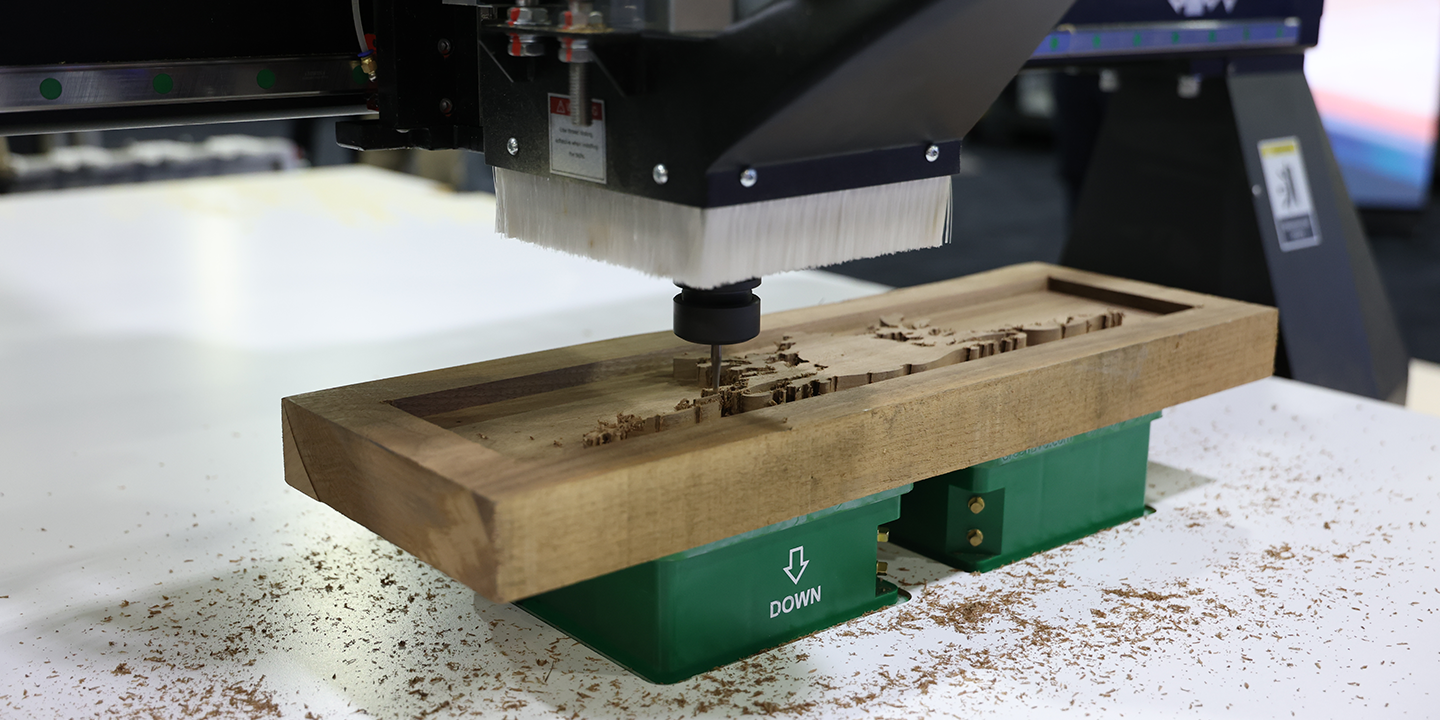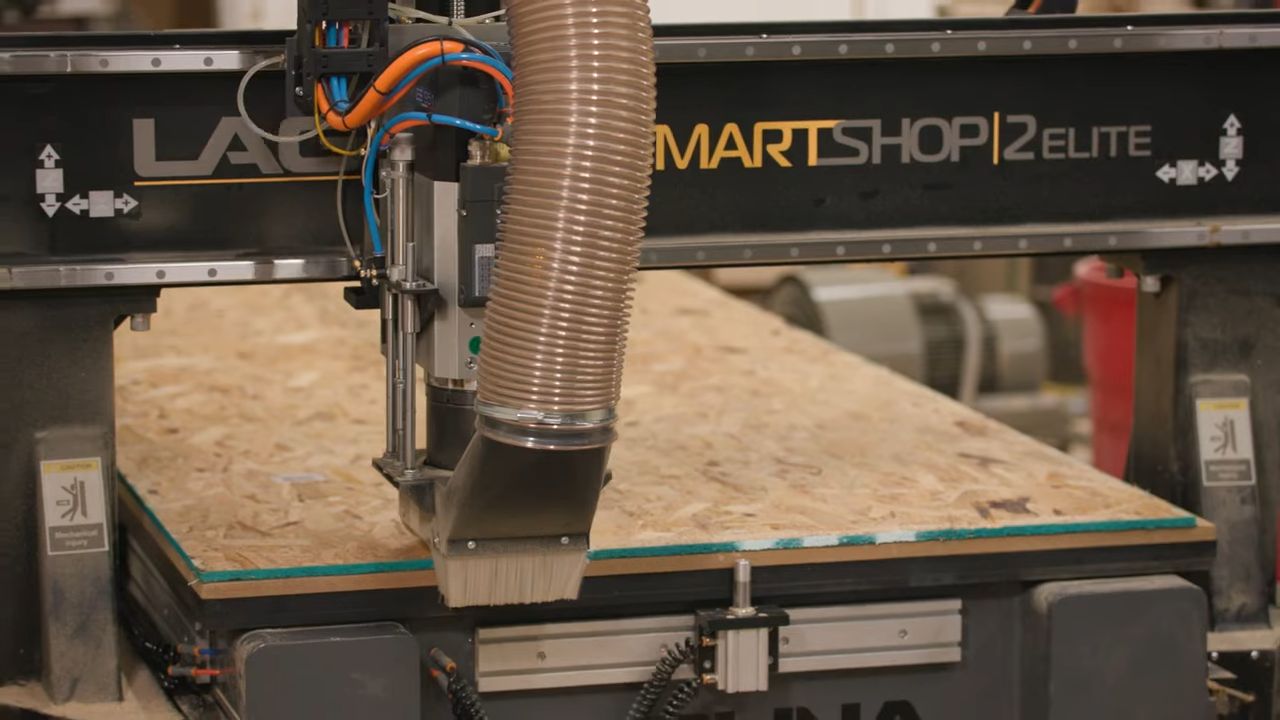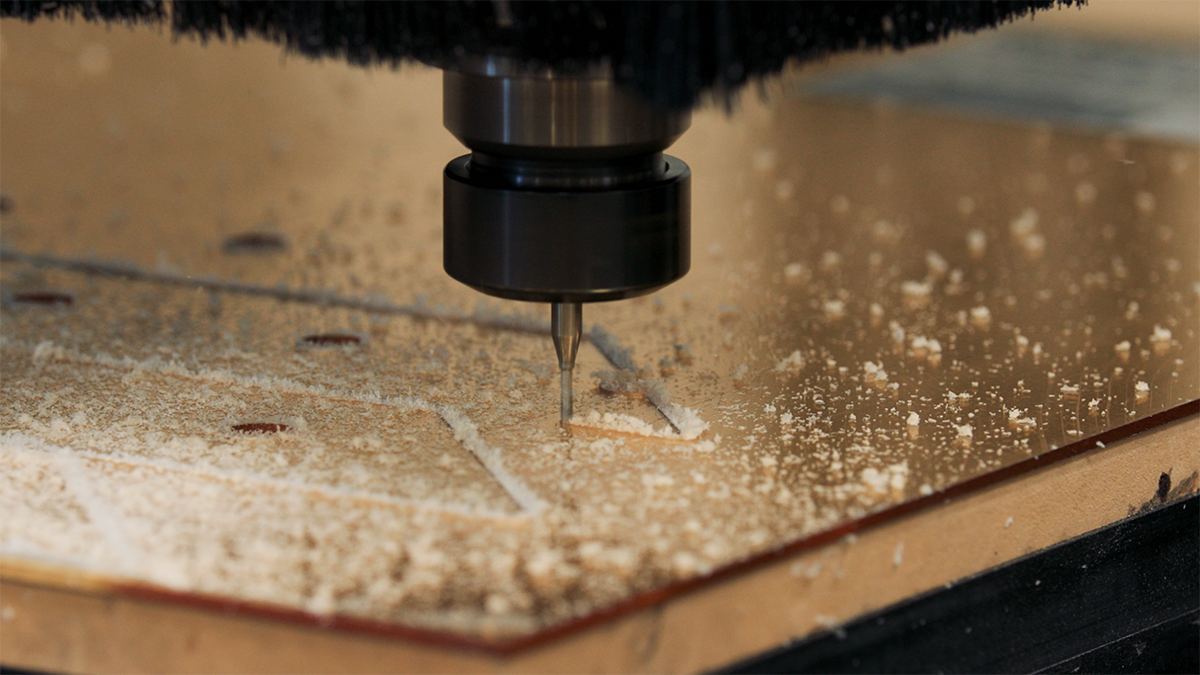
Depth of cut is one of the most consequential settings in CNC routing, and one of the most commonly misunderstood. Cut too shallow and you waste time on unnecessary passes. Cut too deep and you risk chatter, tool breakage, poor surface quality, and damage to the machine or workpiece. The right depth is not a fixed number. It is a function of the machine, the tooling, the material, and the cutting strategy working together.
How Deep Can a CNC Router Cut in One Pass?
The theoretical maximum depth is the usable cutting length of the bit. In practice, the realistic single-pass depth is much lower. Most production CNC routing uses a step-down of one times the bit diameter or less per pass, building total depth across multiple passes. A 1/4" bit might cut 1/4" deep per pass; a 1/2" bit, 1/2" deep. In softer materials like foam and MDF, deeper passes are achievable. In hardwoods and metals, they rarely are. The numbers that matter are set by what your specific machine, tooling, and material can handle together, not by theoretical best-case specs.
What Determines CNC Router Cutting Depth?
No single factor sets the depth limit. The realistic maximum is the weakest constraint in the cutting system, and that constraint shifts depending on what you are cutting and how.
Machine Type and Rigidity
A rigid industrial router sustains deeper cuts than a lighter benchtop machine because it deflects less under cutting force. Flex in the gantry, Z-axis carriage, or spindle mount all reduce the depth at which the machine cuts cleanly. Knowing your machine's actual rigidity, not just its published specs, matters when setting depth parameters.
Spindle Power and RPM
More spindle power means more cutting force available for deeper passes without bogging down or overheating. Spindle RPM interacts with feed rate through chip load: the right balance keeps chips forming cleanly rather than melting or compressing in the cut zone.

Router Bit Size, Type, and Length
Larger diameter bits are stiffer and sustain deeper cuts under the same cutting forces. A bit with 2" of cutting length on a 1/4" shank deflects dramatically more than one with 3/4" of cutting length on the same shank. Bit geometry also matters: upcut spirals evacuate chips from deep cuts effectively; compression bits require through-cut depth to engage both cutting geometries properly.
Material Type and Density
Soft materials allow much deeper passes than hard, dense ones. Foam and pine are forgiving; maple and hickory are not. MDF cuts cleanly but loads the spindle more than softwood of equivalent thickness. Each material has its own cutting force characteristics, and depth settings must reflect those differences.
Feed Rate and Cutting Strategy
Feed rate and depth work together through chip load. Increase depth while holding feed rate constant and you increase cutting force. If you push depth, you typically need to reduce feed rate or increase RPM to maintain target chip load. Mismatching any part of this usually shows up first as poor surface quality or premature tool wear.
Workholding and Machine Stability
A workpiece that moves or vibrates cannot be cut deeply without producing chatter and surface defects. Secure workholding is a prerequisite for deeper cuts. A machine that is not solidly leveled and mounted has less effective rigidity than its design suggests, and that gap shows up most clearly at aggressive cutting depths.
Typical CNC Router Cutting Depths by Material
These are practical starting points. Your specific machine, tooling condition, and workholding determine where your realistic ceiling sits within these ranges.
Wood
Softwoods like pine and cedar: step-down of 1 to 1.5 times the bit diameter per pass is often achievable on a rigid machine with sharp tooling. Hardwoods like maple, walnut, and oak: 0.5 to 1 times the bit diameter is a more reliable starting point. MDF can sustain deeper passes than solid hardwood due to its uniform composition, but generates significant fine dust requiring active chip evacuation. For through cuts in 3/4" sheet goods, most production shops run two to three passes rather than a single full-depth cut.
Plastics
Acrylic and HDPE: 0.5 to 1 times the bit diameter per pass with single-flute or two-flute bits designed for plastics. Heat is the primary constraint, not cutting force. Melting rather than chipping is the failure mode when depth or feed is mismatched. Re-welded chips on the bit or cut edge signal that depth needs to come down or feed rate needs to go up.

Foam and Composites
Foam cuts quickly and handles deeper passes because cutting forces are low. Composites like carbon fiber and fiberglass are the opposite: abrasive, fast on tooling, and requiring conservative depth settings. Dust management with composites is a safety requirement, not just a quality consideration.
Soft Metals
Aluminum, brass, and copper require significantly more conservative settings than wood. A step-down of 0.25 to 0.5 times the bit diameter is a reasonable starting range for aluminum on a rigid router with appropriate non-ferrous tooling and active chip evacuation. Attempting wood-style depths in metal breaks tooling.
How Router Bit Size Affects Depth of Cut
Bit Diameter
Larger diameter bits are stiffer and less prone to deflection, allowing deeper passes at equivalent feed rates. Production routing of thick material typically uses larger diameter tooling even when fine detail work uses smaller bits for finished geometry.
Cutting Length
The fluted cutting length sets the maximum achievable depth, but cutting at the full length is rarely advisable. Practical cutting depth is typically 50 to 75 percent of available cutting length to limit deflection risk and maintain cut quality.
Bit Strength and Deflection
Bit deflection, the bending of the tool under lateral force, increases with depth and decreases with diameter. If parts consistently come out slightly undersized or show a tapered profile through the cut, deflection from too much depth or insufficient bit diameter is a likely cause.
How to Set the Depth of Cut
Choose the Proper Step-Down
Start conservative: one times the bit diameter per pass in wood, 0.5 times in hardwood, 0.25 to 0.5 times in metal. Test and adjust upward from there based on actual results.
Set Spindle Speed and Feed Rate
When you change depth, recalculate feed rate to maintain target chip load. Leaving feed unchanged when depth increases is one of the most common causes of tool wear and surface quality problems.
Use Progressive Toolpaths
Roughing passes at more aggressive depths followed by a lighter finishing pass produces better results than a single pass attempting both material removal rate and surface quality simultaneously.
Run a Test Cut
On any new material, new bit, or new setup, run a test cut in scrap before committing to production. Evaluating a short test takes minutes. Diagnosing a failed production run takes considerably longer.
How to Safely Make Deeper CNC Router Cuts
Improve Workpiece Hold-Down
Deeper cuts generate higher cutting forces. Verify holddown secures the part across its full footprint, not just at the edges, and that pressure is adequate for the forces the cut will generate.
Maintain Machine Rigidity
Check spindle drawbar tension, tool holder seating, and fixture mounting before deep cut operations. A loose connection anywhere in the system amplifies deflection and chatter.
Improve Chip and Dust Evacuation
Chips in the cut zone re-cut on subsequent passes, increasing cutting force and generating heat. In deep pockets, active chip evacuation directly limits how aggressively you can cut. Air blast and spindle-mounted dust collection both matter.
Monitor Vibration and Tool Performance
Listen for chatter or tool strain during deep cuts. Watch for smoke or burning smell. Stop and diagnose before continuing if anything sounds or looks wrong. Chatter that is ignored tends to escalate.
Signs Your CNC Router Is Cutting Too Deep
Chatter and Excessive Vibration
Audible ringing or vibration during cutting indicates cutting forces are exceeding what the system can handle cleanly at the current depth.
Poor Surface Finish
Wavy or scalloped surfaces that appear as depth increases but not at shallower cuts indicate the depth is pushing the tool into deflection or resonance.
Tool Deflection or Breakage
Broken bits and parts that consistently come out slightly undersized or show a taper through the cut depth are classic signs of excessive deflection.
Spindle Strain and Excessive Heat
A spindle that sounds labored or runs noticeably hot is removing more material than its power output can sustain cleanly. Reduce depth and recheck feeds and speeds.
Common Cutting Depth Mistakes
Using Too Much Depth in One Pass
Multiple shallower passes almost always produce better results, longer tool life, and less machine wear than a single aggressive pass. The time saved by cutting deeper rarely compensates for the problems it creates.
Choosing the Wrong Router Bit
A bit with too much cutting length relative to its diameter, or geometry mismatched to the material and operation, limits reliable cutting depth regardless of other parameter adjustments.
Ignoring Material Limitations
Applying settings developed for one material to another without adjustment reliably breaks tooling. Hardwood, softwood, MDF, plastic, and metal all require different depth settings.

Poor Chip and Dust Management
Cutting deep without adequate chip evacuation fills the cut zone with re-cut debris, increases cutting force, generates heat, and degrades surface quality across the job.
CNC Router Cutting Depth FAQs
Can a CNC Router Cut Through Two-Inch Hardwood?
Yes, with the right tooling and a multi-pass strategy. A 1/2" upcut spiral carbide bit on a rigid machine can cut through 2" hardwood in four to eight passes depending on machine rigidity and species. Attempting it in one or two passes risks chatter, deflection, and tool breakage. The multiple-pass approach produces better surface quality and more predictable results.
What Is the Deepest a Standard Router Bit Can Cut?
Cutting length on standard production bits is typically 1" to 2". Extended-reach bits go deeper but are more prone to deflection and require more conservative depth per pass. Maximum cutting length and maximum practical cutting depth per pass are not the same number. Treat practical cutting depth as 50 to 75 percent of rated cutting length in most applications.
How Do You Know if a Cut Is Too Deep?
Chatter, vibration, poor surface finish, a labored spindle, and tool breakage are direct indicators. More subtly, parts that consistently come out slightly undersized or show a taper through the cut depth are demonstrating deflection before it becomes an obvious problem.
What Router Bit Is Best for Deep Cuts?
Larger diameter carbide upcut spiral bits with shorter cutting lengths relative to diameter are the most deflection-resistant option for deep cuts. Upcut geometry evacuates chips efficiently from deep pockets. For through cuts in sheet goods where both faces need to be clean, compression bits are the better choice. Match the bit geometry and diameter to the specific cut requirement.