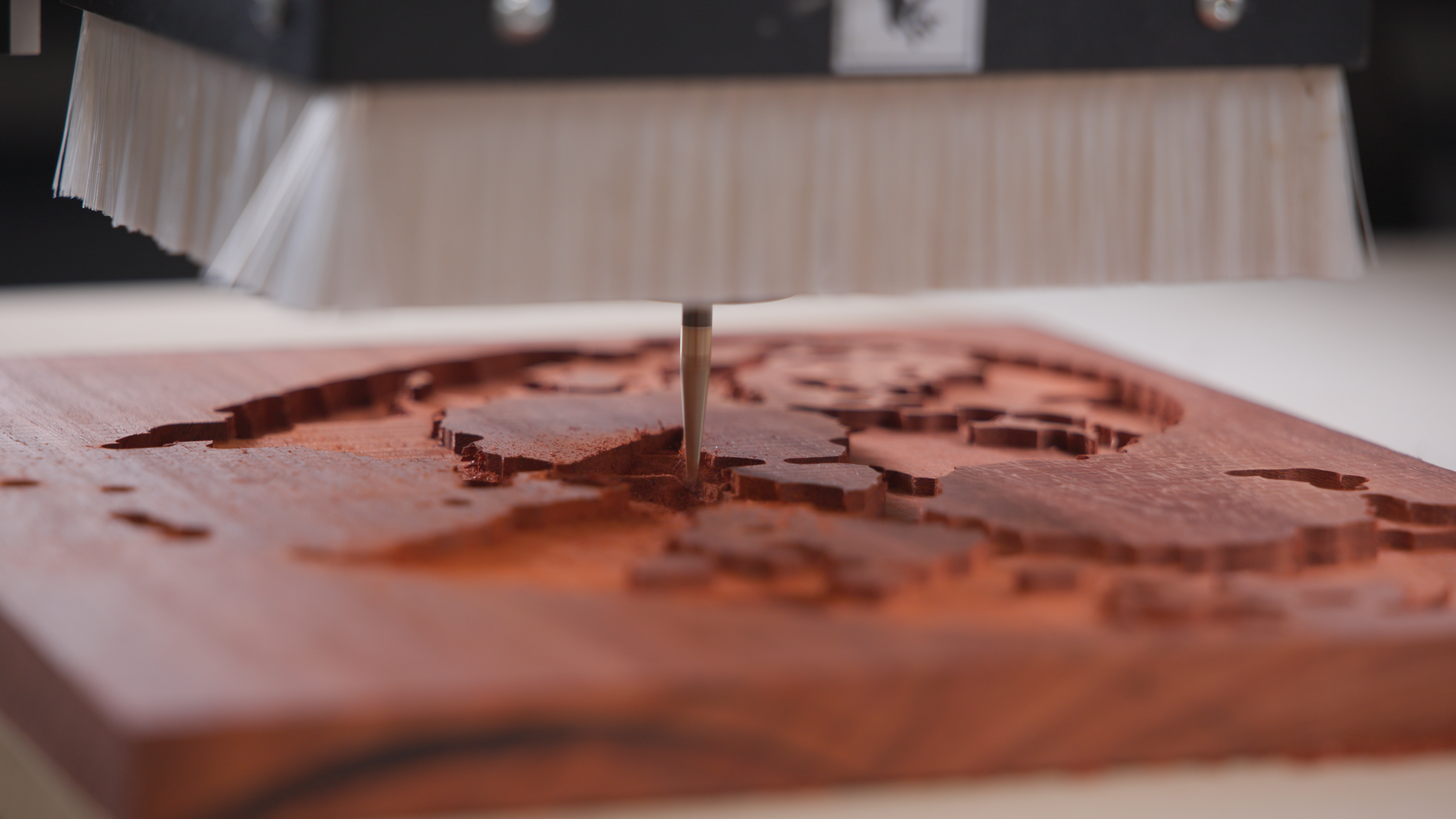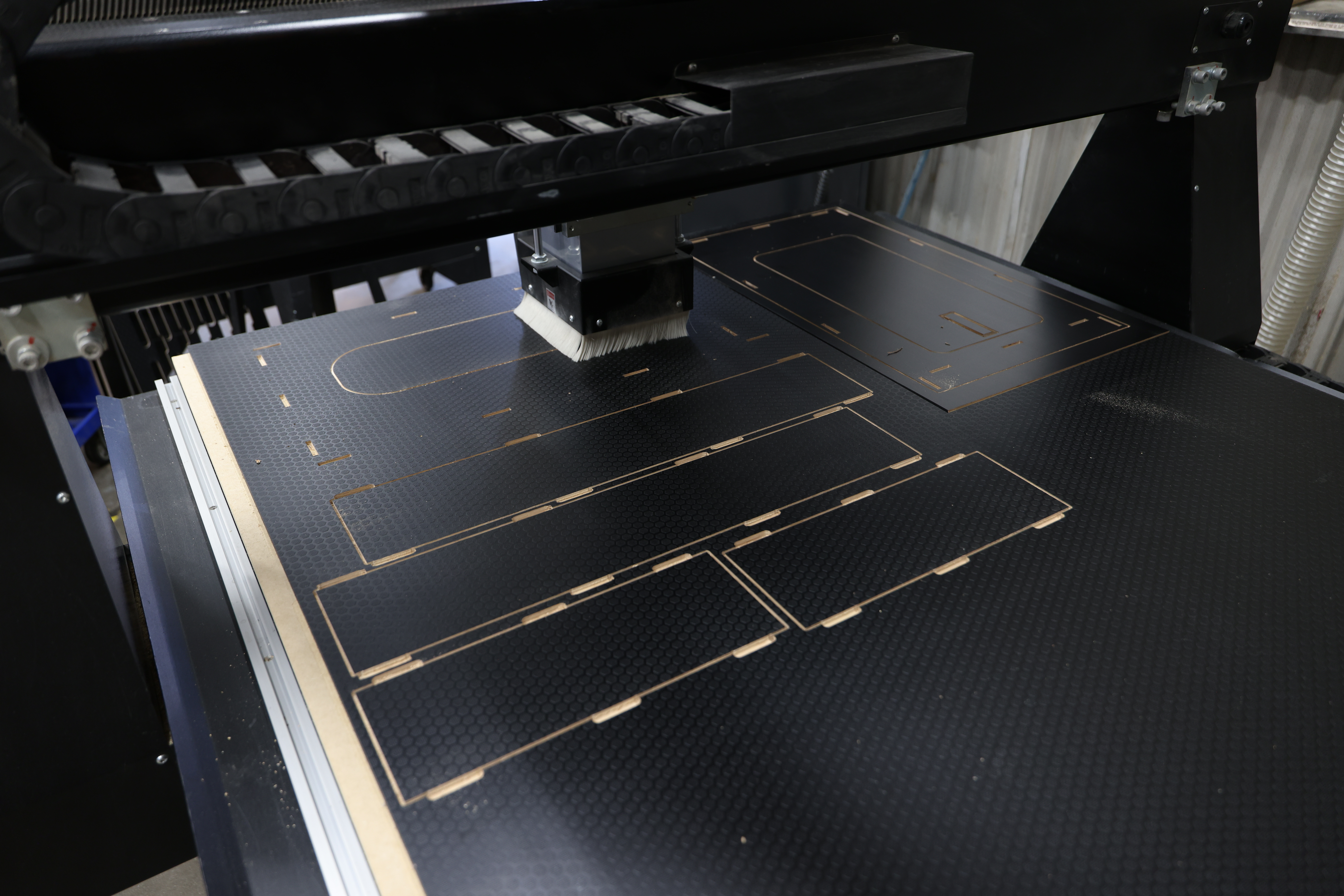
One of the questions new CNC router owners ask most often is what the machine can actually cut. The short answer: quite a range. Wood and sheet goods are the high-volume workhorses, but a properly configured router also cuts acrylic, foam, aluminum, brass, carbon fiber, and more. Knowing what each material requires, and which ones to stay away from, is what gets you consistent results instead of broken tooling and wasted stock.
Common CNC Router Materials
CNC router materials fall into a handful of broad categories: wood and wood-based materials, plastics and acrylics, foam, soft metals, and composites or specialty materials. Each behaves differently under a spinning cutter, demands different tooling, and has its own finishing considerations.
Wood and Wood-Based Materials
Wood tolerates a broad range of cutting parameters, works with most bit types, and is easy to source in the species and dimensions you need. It is where most operators develop their process instincts before moving into materials that punish setup errors more severely.
Softwoods
Pine, cedar, and fir machine quickly and cleanly. Feed rate matters: too slow and the softer fibers tear rather than cut, leaving a rough edge that sanding alone will not fully fix.
Hardwoods
Oak, maple, walnut, and cherry produce finer detail and better edge quality. Dense species like hard maple wear tooling faster and reward close attention to bit condition.
Plywood
Baltic birch and cabinet-grade plywood are workhorses on production CNC routers. Dimensionally stable, efficient to nest, and well-suited to compression bit cutting. Lower-grade plywood with voids causes tearout and deflection.
MDF
MDF machines with exceptional cleanliness and holds detail well with no grain direction to manage. The trade-off is dust: fine MDF particulate is harder on collection systems and lungs than solid wood, and proper dust collection is non-negotiable.
Plastics and Acrylic Materials
Plastics introduce a problem wood does not: heat. Chips that are not evacuated quickly melt and re-weld to the cut edge. Single-flute or two-flute bits with high helix angles clear material fast enough to prevent this. Get that right and plastics machine cleanly and efficiently.
Acrylic
Acrylic produces a clean, near-polished edge when parameters are dialed in. Cast acrylic machines better than extruded for detailed cuts and engraving; extruded is more cost-effective for simple profiles.
HDPE
High-density polyethylene is extremely durable and chemical-resistant. The standard material for food-contact cutting boards, marine components, and industrial parts where toughness matters more than optical clarity.
PVC
PVC cuts reasonably well for signage and display fabrication but generates chlorine-containing fumes that require adequate ventilation. Not a material to run in an enclosed space without air movement.
Other Plastics
Delrin machines extremely well and holds tight tolerances, making it reliable for functional mechanical parts. Polycarbonate melts more readily than acrylic and needs aggressive feed rates. Nylon and UHMW require sharp single-flute tooling.
Foam Materials
Foam is fast, forgiving, and underused outside the industries that already rely on it. It needs almost no cutting force, runs at high speeds, and produces complex 3D shapes quickly. The main challenge is volume: foam generates a lot of dust and collection needs to keep up.
Prototyping Foam
High-density urethane foam (HDU) holds detail well, accepts paint and finish, and is stable enough to function as a mold pattern or layup form.
Signage and Display Foam
HDU is the dominant material for exterior dimensional signs and 3D lettering. Weather-resistant, paintable, and light enough to mount without structural concerns.
Mold and Model-Making Foam
EPS cuts fast and inexpensively for large-scale models and casting patterns. Polyurethane tooling board is the right call when a mold needs to hold tight tolerances through repeated use.
Soft Metals
With the right spindle power, tooling, and setup, a CNC router handles aluminum, brass, and copper cleanly and efficiently. Metal cutting requires more attention to chip evacuation and fixturing than wood, but the applications are real: signs, nameplates, architectural panels, and short-run fabrication work all come off a properly configured router without issue.
Aluminum
The most commonly CNC-routed metal. Single-flute or two-flute carbide end mills designed for non-ferrous materials cut it cleanly. Air blast or light lubrication keeps chips cleared and prevents re-welding at the cut edge.
Brass and Copper
Brass machines smoothly and produces a sharp, clean edge well-suited for nameplates, hardware, and architectural detail. Copper is workable but demands more attention to built-up edge on the cutter.
Thin Metal Sheets
Aluminum composite panels machine cleanly with standard tooling and are widely used for exterior signage and architectural applications. Thin solid aluminum sheet is routable but requires a secure holddown strategy to prevent lifting during the cut.
Composite Materials
Carbon fiber, fiberglass, and epoxy tooling board are all CNC-routable, but composites are a category where dust management moves from important to critical. Shops that run composites regularly typically dedicate a machine to the work and invest in proper enclosure and high-efficiency collection.
Carbon Fiber
Machines cleanly with diamond-coated or solid carbide tooling. The dust is fine, conductive, and a genuine respiratory hazard. Sealed enclosures and high-efficiency collection are non-negotiable for regular carbon fiber work.
Fiberglass
Produces sharp, irritating particulate and dulls bits faster than most other materials. Full PPE and respiratory protection required.
Epoxy Tooling Board
Designed specifically for CNC mold and pattern work. Holds tight tolerances, produces excellent surface finish, and stays stable across temperature ranges that would shift wood or foam.
Materials to Avoid Cutting With a CNC Router
Some materials do not belong on a CNC router. A few will damage the machine, others create real safety hazards, and some simply will not cut well regardless of how the setup is optimized.
Hardened Steel and Very Hard Metals
Hardened steel, titanium, and other high-hardness metals exceed what a CNC router can reliably machine, producing chatter, tool breakage, and accelerated mechanical wear.
Glass and Ceramic
Standard glass and fired ceramic chip and crack rather than cut cleanly. Attempting it with a standard end mill damages both the material and the tool.
Hazardous Plastics or Materials That Release Toxic Dust
PVC burning produces chlorine gas. Some composite laminates release hazardous fumes when cut. Always review the safety data sheet for any unfamiliar material before it goes on the machine.
Brittle or Unstable Materials
Materials that flex, cannot be held flat, or shift with humidity will not hold tolerances and produce inconsistent results even with careful setup.

Factors That Affect What Materials a CNC Router Can Cut
Router Power and Machine Rigidity
Spindle power and machine rigidity determine how much cutting force is available and how much chatter occurs under load. A rigid, high-power machine opens up material options that a lighter machine cannot access.
Cutting Bit or End Mill Type
Bit geometry, flute count, coating, and material all affect what cuts well. Matching the bit to the material is as important as the machine setup itself.
Material Thickness
The practical thickness limit is not just about reach, it is about whether the machine holds tolerances and finish quality across multiple passes without deflection accumulating.
Feed Rate and Spindle Speed
The relationship between RPM and feed rate determines chip load. Too little generates heat and rubbing; too much overloads the bit. Getting this right for each material is a core skill that does not transfer automatically from one material to another.
Workholding and Dust Collection
Unsecured material chatters and produces bad results regardless of everything else. Chips that are not evacuated re-cut and generate heat, degrading both finish and tooling life.
How to Choose the Right Material for Your CNC Project
Match the Material to the Project Goal
Start with the end use and work backward. What does the finished piece need to do, and what environment will it live in? The material should serve those requirements.
Consider Skill Level and Machine Size
Build skills in forgiving materials before moving into metals and composites, where setup errors produce broken tools and ruined parts.
Think About Finish, Strength, and Cost
Match material quality to the project value. A painted MDF sign does not need to be cut from walnut. A structural bracket that will carry load cannot be made from foam.
Safety Tips for Cutting CNC Router Materials
Use P100 or N95 respiratory protection for MDF, composites, and plastics. Eye protection is required whenever the machine is running. Review the safety data sheet for any unfamiliar material before it goes on the machine. Never leave the machine unattended on a first run: bit breakage, material shift, and thermal issues in plastics can escalate faster than expected.
Final Thoughts
The material range of a CNC router is broader than most operators expect when they start out, and it grows as your process knowledge does. Start with the materials your work already calls for, dial in your setup, and expand from there. Laguna Tools builds CNC routers for shops serious about what they cut. Get in touch if you are evaluating machines or pushing into new material categories.